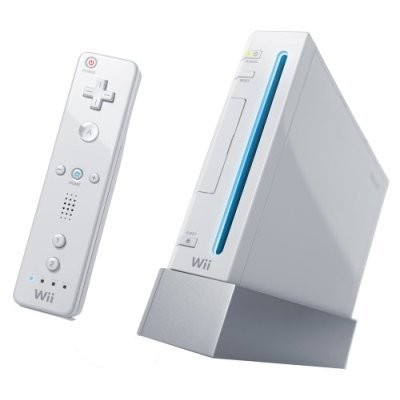
 attention to the commercial and how it could be seen as confusing to a child. Nintendo has taken CARU’s opinion on the commercial and has agreed to remove it from their advertising campaign, but this incident brings up the general ethical issue of children and advertising and whether or not it is ethical to advertise to children. Although Nintendo has consented to revise their marketing plan, not all companies change their advertisements according to what CARU thinks should and should not be included in product commercials. Advertising seems to be an ongoing problem when it comes to children, but companies are becoming more aware of their power on children’s decisions and thoughts and they are starting to actively take a part in preventing confusing advertising directed at children.
The commercial that was in question from Nintendo was for their new game called Mario Party 8, which is one of the gaming system’s top selling and most popular games for children. The commercial depicts a group of children playing the game at a slumber party and has a caption which informs the viewer that the game and the console are sold separately. CARU was concerned with the ad for the main reason that children may be confused about what it is they are purchasing when getting a Nintendo Wii. Most children are not able to read the caption or are not paying attention to what it is saying during the commercial because they are focused on the action that is taking place. Because of this they may not be aware that in order to play Mario Party 8 there are various things that need to be purchased besides the Nintendo Wii. In order to play the game the way that it is depicted in the commercial, a Nintendo Wii, Mario Party 8 game, and separate game controllers must be purchased. From the commercial a child may assume that with either the Nintendo Wii or Mario Party 8 itself that all these things are going to be included and may be disappointed if they request these things from their parents and they end up receiving something other than what they saw in the advertisement.
The issue of the Nintendo Wii commercial is relatively small because it is a simple misunderstanding of an advertisement and Nintendo cooperated in CARU’s decision about the commercial and they agreed to pull it from their advertising. In the field of marketing and general media that children are exposed to there can arise other problems that are basically like this but can end up being more severe for a child if they are not aware of all that is included in a particular purchase. Companies like McDonalds are becoming better at informing parents and children what is included in their meals with nutrition facts on the outside of Happy Meal
 boxes but it has been a long road to get to the point where companies are willing to disclose all information to their consumers, especially companies that deal with small children as one of their main markets. Companies that use children as a market usually depend on them for most of their revenue, and as a profitable market they should be respected in their position and should be given all information in and advertisement so that they can make an informed decision about their purchase. Ads that are made for children and designed in a way that is comprehensible to them will not only help them to better understand different toys and services that they can purchase, but it will also help them to grow into smart consumers who will know how to make well rounded decisions about future purchases. Corporations play a large part in the development of young consumers and should not only provide quality products but also market these products to their younger audiences in a conscientious manner.


1 comment:
A.R.T,
This was a very interesting post, and raises more questions than advertising on children. I am not sure what is scarier, advertising on children, or the fact that kids have such an active role in deciding what their parents buy for them. As far as advertising goes, this is something that has been around for years, and I'm sure you remember commercials for beanie babies and light brite. The only difference now is that companies are using child psychologist to write these commercials and make them marketable to kids. I have seen the commercial you were referring to, and although it does seem like everything is included, I'm sure the kids have other video game consoles where everything was not included. However, I wonder where are the parents in all of this? If the parents were taking an active role in the child's life this would not be an issue. I It is amazing to me to see that a child can persuade their parents to buy them anything they want without the parent questioning the product or researching it. If parents were to see the commercials for the Wii I would think that they would tell the child that everything is sold separately. In that case the child would just ask the parent to buy them the game and the extra controls. It is sad but it appears that in this day and age parents are often working and tend to buy their children guilt presents to compensate for the time they can not actually spend with them. I do agree with you that McDonald's has taken great stride in finally placing their nutritional facts on their food. This is one step to having children understand exactly what they are consuming. I would have liked to see the children's take on this, to see if they nutritional facts now available have changed their opinion on the food. Also, is there any evidence that the Nintendo Wii moves kids from a couch potato to a more active lifestyle? Keep in mind that children face an uphill battle with advertising, when its not so much about obtaining what they what, rather than obtaining to "everyone" else already has. Overall excellent post.
Post a Comment